




— Blogs —
—Products—
 Consumer hotline +8618073152920
 WhatsApp:+8615367865107
Address:Room 102, District D, Houhu Industrial Park, Yuelu District, Changsha City, Hunan Province, China
Product knowledge
Time:2022-03-18 19:52:36 Popularity:1990
NB-IoT can achieve low power consumption because terminal devices can spend long periods in power-saving states and transmit small amounts of data only when required. In agricultural and environmental monitoring, this matters for remote sensors that are hard to service frequently.
The original article explains that NB-IoT terminals can work in a power-saving mode where the device appears inactive while remaining registered to the network. This reduces repeated network attachment work and helps lower energy use for small, periodic data transmission.
Low power consumption is important for field sensors, meter reading and remote monitoring sites where batteries or solar power are used. Actual battery life depends on network condition, reporting interval, signal strength, device design, battery capacity and temperature. Do not treat a generic battery-life claim as a project guarantee.
| Item | Engineering check | Why it matters |
|---|---|---|
| Data volume | Small periodic packets suit low-power operation. | Reduces transmission energy. |
| Reporting interval | Longer intervals usually reduce power use. | Controls battery planning. |
| Signal quality | Weak signal can increase energy use. | Affects field deployment. |
| Power mode | Power-saving settings supported by device and network. | Extends service interval. |
| Project test | Verify upload and power behavior at the site. | Reduces deployment risk. |
NB-IoT is suitable for low-data, wide-area monitoring where cellular coverage is available and real-time high-rate communication is not required. It may fit soil monitoring, water metering, simple environmental points or distributed equipment status. It is less suitable when the application needs high bandwidth, low delay control or large image transmission.
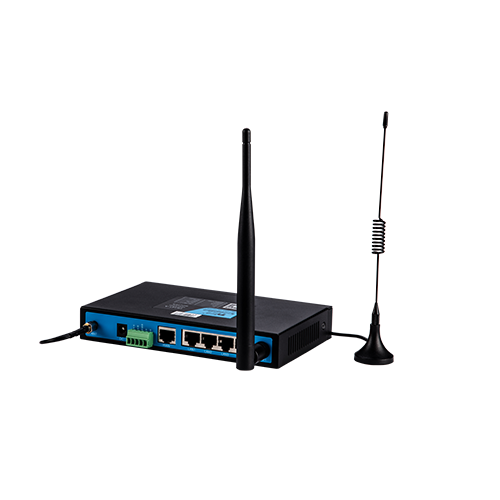
When NiuBoL sensors are used in a project that requires NB-IoT, the gateway or communication device should be selected to match the sensor output and the platform. Sensor wiring, protocol and channel naming still need engineering work; NB-IoT only describes the network path.
For procurement, confirm network coverage, reporting interval, power supply, data format and platform compatibility before field installation.
For why nb-iot can achieve low power consumption, procurement should start with measured parameter, output interface, power supply, installation point and data use. This keeps the article connected to the original topic while giving buyers a usable checklist for inquiry and technical review.
For the why nb iot can achieve low power consumption context, installation should follow the site purpose: install the device where the measured condition represents the project objective. Maintenance should include inspect cabling, mounting condition and readings during routine service, and acceptance should verify live value, unit, timestamp, device label and receiving platform record.
Q1: Why can NB-IoT achieve low power consumption?
It supports power-saving operation and small periodic data transmission, reducing how often terminals need active communication.
Q2: Is battery life fixed?
No. Battery life depends on signal strength, interval, device design, power mode, temperature and battery capacity.
Q3: Where is NB-IoT suitable?
It suits low-data remote monitoring such as meters, soil points or environmental sensors where coverage is available.
Q4: Where is it not suitable?
It is not suitable for high-bandwidth video or fast closed-loop control requirements.
Q5: What should buyers test?
Test coverage, upload success, reporting interval, power behavior and platform data display at the real site.
Q6: Does NB-IoT replace sensor protocol checks?
No. Sensor output, wiring and receiver mapping still need confirmation.
NB-IoT low power comes from power-saving operation and small data transmission. In NiuBoL projects, it should be evaluated as a communication path, not as a substitute for sensor integration.
Prev:What is lora IoT technology The difference between LoRa and wireless technology?
Next:What is NB-IoT?
Related recommendations
Sensors & Weather Stations Catalog
 Agriculture Sensors and Weather Stations Catalog-NiuBoL.pdf
Weather Stations Catalog-NiuBoL.pdf
Agriculture Sensors Catalog-NiuBoL.pdf
Water Quality Sensor Catalog-NiuBoL.pdf
Related products
 Combined air temperature and relative humidity sensor
 Soil Moisture Temperature sensor for irrigation|NBL-S-THR
 Soil pH sensor RS485 soil Testing instrument soil ph meter for agriculture |NBL-S-PH
 Wind Speed sensor Output Modbus/RS485/Analog/0-5V/4-20mA
 Tipping bucket rain gauge for weather monitoring auto rainfall sensor RS485/Outdoor/stainless steel
 Pyranometer Solar Radiation Sensor 4-20mA/RS485

Screenshot, WhatsApp to identify the QR code
WhatsApp number:+8615367865107
(Click on WhatsApp to copy and add friends)

