




— Blogs —
—Products—
 Consumer hotline +8618073152920
 WhatsApp:+8615367865107
Address:Room 102, District D, Houhu Industrial Park, Yuelu District, Changsha City, Hunan Province, China
Product knowledge
Time:2023-02-25 21:18:44 Popularity:1643
The Internet of Things provides opportunities for modern agriculture when field sensors, communication and software are connected to real farm decisions. Agricultural IoT should be designed as a practical data workflow, not only as a technology concept.
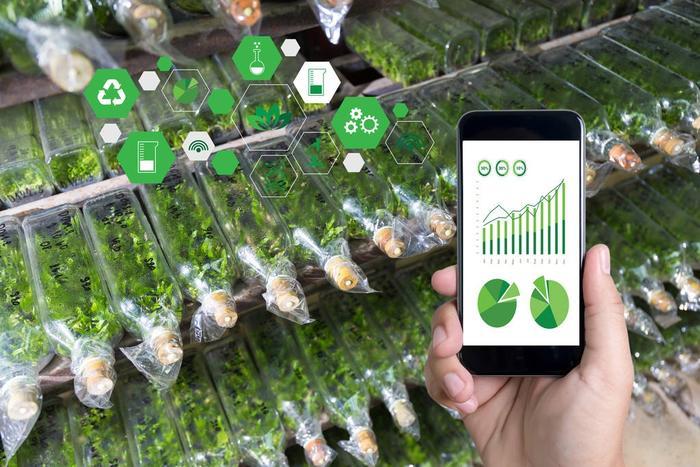
Agricultural IoT normally includes a sensing layer, transmission layer and application layer. Sensors measure weather, soil or greenhouse conditions. Communication transfers data through RS485, gateways or networks. The application layer turns readings into display, alerts, reports or management records.
| Layer or channel | Project meaning | Integration check |
|---|---|---|
| Sensing layer | Weather, soil, light or greenhouse sensors | Confirm output and placement |
| Transmission layer | RS485, gateway or network communication | Confirm distance and protocol |
| Application layer | Display, alarm, analysis or export | Confirm user workflow |
| Maintenance | Cleaning, inspection and records | Assign responsibility |
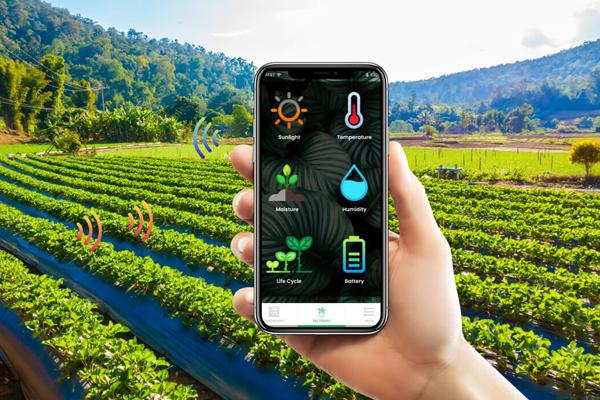
IoT can support irrigation timing, spraying decisions, greenhouse control, orchard monitoring and field service. It does not solve poor sensor placement or unclear user responsibility. Buyers should first define the decision supported by data, then select sensors and communication.
NiuBoL agricultural projects may combine weather stations and agricultural sensors. RS485/Modbus RTU is useful where several sensors connect to a logger. The integrator should record addresses, cable routes, power conditions and data platform requirements.
For inquiry, provide crop type, field size, monitoring purpose, power condition, network condition and required data output. This information allows a useful configuration instead of a generic IoT quotation.
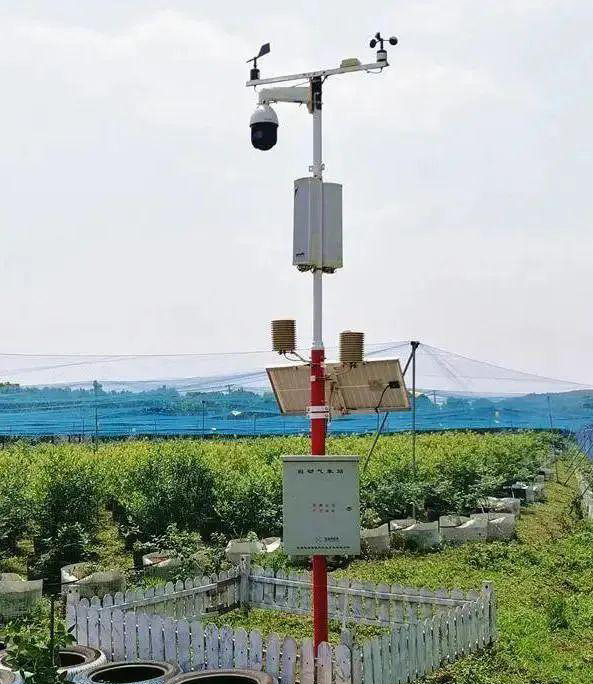
For modern agriculture, IoT should not be treated as a decoration. The system must connect sensors to a farmer, agronomist, contractor or platform that will use the data. If no one responds to a reading, the architecture is incomplete.
Before ordering, define measured parameters, installation points, power, communication distance, data ownership and required reports. This helps NiuBoL or the integrator propose a practical configuration instead of a generic IoT package.
Modern agriculture often starts with a small monitoring scope. A farm can begin with weather and soil data for one representative block, then expand after the team understands how the data is used. This approach reduces unused sensors and makes training easier.
This station topic should be checked against the receiving system before purchase. If the user needs local display, confirm screen placement and units. If the user needs remote access, confirm logger storage, communication method and platform account requirements. If the data enters a third-party cabinet, wiring and protocol documentation become the main acceptance items.
For "internet of things" for the development of modern agriculture provides opportunities, for , confirm the application, measured parameter, output type, installation position and receiving system before comparing products or quotations. This keeps the article topic tied to a real project decision.
For "internet of things" for the development of modern agriculture provides opportunities, confirm output type, RS485 or analog wiring, Modbus RTU settings, logger inputs and upstream communication before installation.
For "internet of things" for the development of modern agriculture provides opportunities, separate application areas by decision use. A road-weather station, farm station and campus station may share sensors but use different acceptance checks.
For "internet of things" for the development of modern agriculture provides opportunities, verify live readings, units, timestamps, channel names, mounting stability, power condition and the expected data storage or export path.
For "internet of things" for the development of modern agriculture provides opportunities, a compact station is suitable when the project needs easier installation and several weather variables at one point, provided exposure is acceptable.
For "internet of things" for the development of modern agriculture provides opportunities, send site photos, required parameters, installation height, power condition, communication method, platform requirement and maintenance access limits.
Agricultural IoT creates value when sensors, communication and user decisions are specified together.
Prev:Agro-meteorological sensors in demand
Next:Developing precision agriculture is a core part of digital agriculture
Related recommendations
Sensors & Weather Stations Catalog
 Agriculture Sensors and Weather Stations Catalog-NiuBoL.pdf
Weather Stations Catalog-NiuBoL.pdf
Agriculture Sensors Catalog-NiuBoL.pdf
Water Quality Sensor Catalog-NiuBoL.pdf
Related products
 Combined air temperature and relative humidity sensor
 Soil Moisture Temperature sensor for irrigation|NBL-S-THR
 Soil pH sensor RS485 soil Testing instrument soil ph meter for agriculture |NBL-S-PH
 Wind Speed sensor Output Modbus/RS485/Analog/0-5V/4-20mA
 Tipping bucket rain gauge for weather monitoring auto rainfall sensor RS485/Outdoor/stainless steel
 Pyranometer Solar Radiation Sensor 4-20mA/RS485

Screenshot, WhatsApp to identify the QR code
WhatsApp number:+8615367865107
(Click on WhatsApp to copy and add friends)

